 Case study · Mobile app
Designing an app for a Multi-Service Marketplace
Hiring through an app needs trust first.
Information Architecture Focus
With such a wide variety of services available on the platform, one of the biggest challenges was structuring them in a way that felt intuitive. Without clear categorization, users risked feeling overwhelmed by choice and unsure of where to start. The aim was to help users quickly identify the tasker or service that matches their needs.
Building Trust in App Based Hiring
Many users in Bahrain rely on personal referrals when hiring help, as it’s seen as more trustworthy. The challenge was to create an interface that communicates safety and credibility so users feel confident booking through a digital platform.
Research first.
For Red Nation we used 4 of our methods.
Partner Alignment
An initial meeting was held with Red Nation's stakeholders and our design firm, Vitruvian, to align on goals, priorities, and expectations. This ensured that both teams shared a unified vision for the app from the very beginning.
Wireframing
Created wireframes to outline the platform's core user journeys focusing on task listing, booking and tracking.
Prototyping
Developed interactive prototypes to visualize user flows, gather quick stakeholder feedback, and refine the design before handing it to developers.
Developer Alignment
Ensured that Vitruvian’s design goals and the development team’s execution were perfectly aligned to ensure the final product reflected the original vision
Clarity in Service Exploration
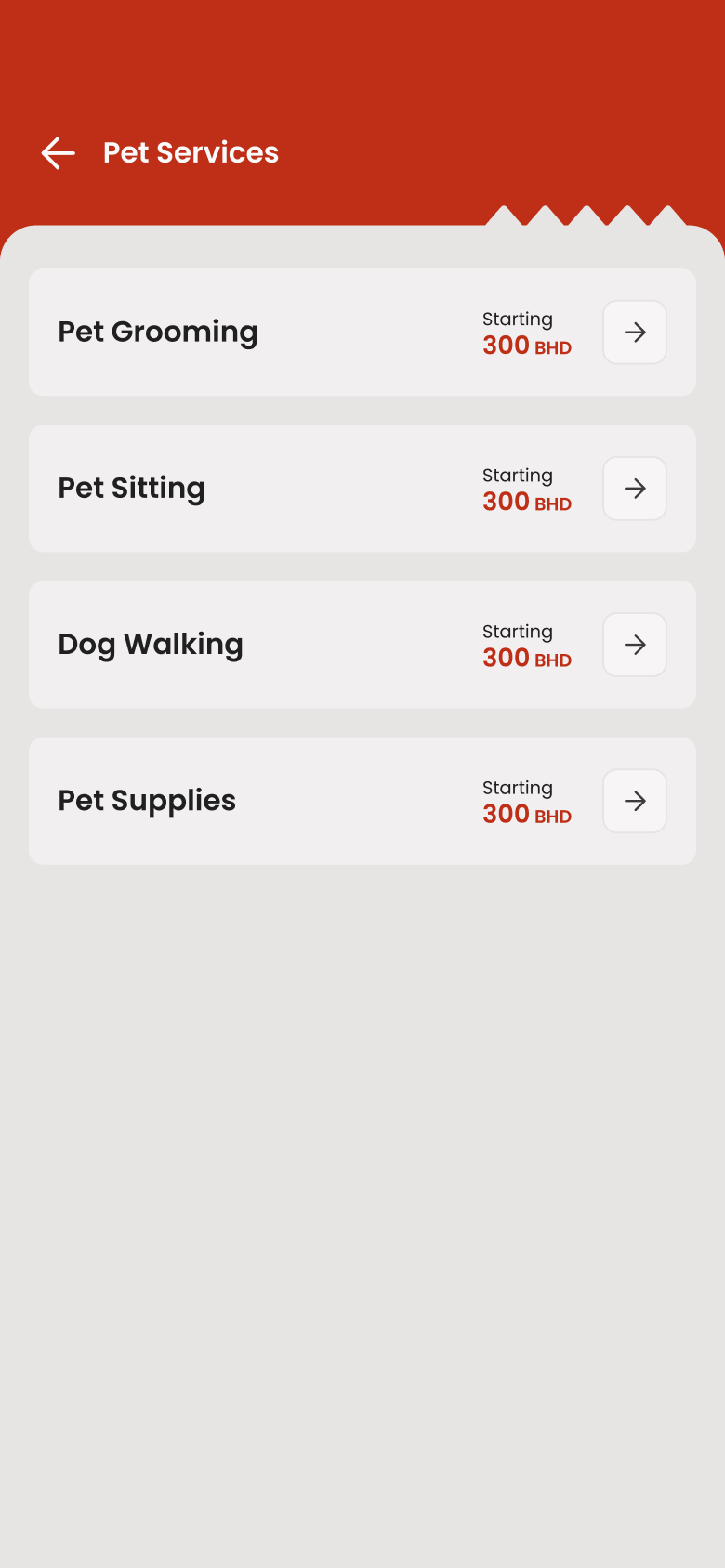
Services were organized into a clear content hierarchy with logical categories and guided pathways. Search and filtering tools were introduced to help users narrow down options quickly, while consistent layouts ensured familiarity across service types. This structure reduced cognitive load, making it easy for users to explore the platform and identify the right tasker or service without feeling overwhelmed.
Trust-Centered Design
Trust signals were embedded throughout the platform to reduce hesitation around app based hiring. From the first interaction, users are guided through clearly defined service categories that ease exploration. Each tasker profile was designed to go beyond a simple name and contact detail by highlighting key credibility indicators. Verification badges established trust by confirming legitimacy, while transparent reviews provided social proof from past clients. Key details such as skills, service specialties, availability, and pricing were displayed in a structured format to reduce uncertainty. These design choices created a sense of reliability that mirrored the reassurance people usually find in personal referrals making the app feel like a safe and dependable alternative.
What we expect to change for Red Nation
- Clarity in Service Exploration · Gojek order-time caseProjected: down 20 percent, time from home screen to a booking request.
- Clarity in Service Exploration · NN/g tree-test resultsProjected: up 10 percentage points, more first-time finds of the right category.
- Trust-Centered Design · MeasuringU task benchmarkProjected: up 10 percentage points, success comparing taskers on skills and price.
Projected: a benchmark-based estimate, not yet measured. To be confirmed after launch.
What we expect to change for Red Nation
- ~20%↓Projected: down 20 percent, time from home screen to a booking request
- ~10pts↑Projected: up 10 percentage points, more first-time finds of the right category
- ~10pts↑Projected: up 10 percentage points, success comparing taskers on skills and price
Projected figures are estimates built from industry benchmarks and the behaviour this design changes. They are not measured results; we confirm them against analytics after launch.



 Photos & Video


 Extra Notes

 4/5
 PRO



 Payment
 Commitment


 Graphic Design
 Graphic Design

 +965 97377282
 Jabriya Block 12 - Street 8 - House 18
 Graphic Design
 Food & Beverage
 Bahrain
 20 hr/mo
 Registration Complete